
 Cart is empty
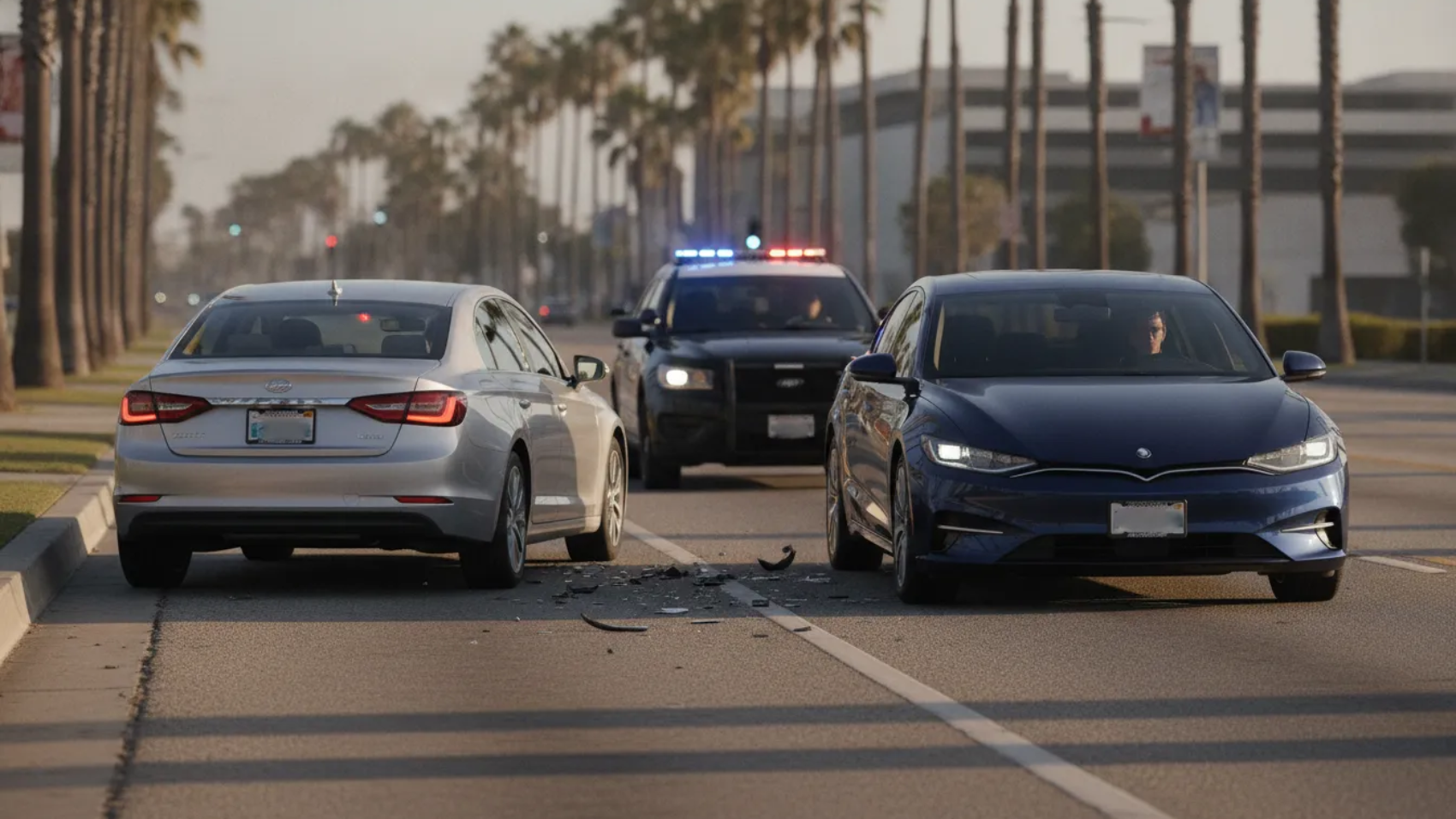
Knowing what to do after a car accident in California starts with one job: make the scene safe, then record what happened. The next hour can decide whether police document the crash, whether the DMV expects an SR-1, and whether an insurer later disputes your injuries. You do not need to argue fault on the shoulder. You do need to stop, get help, exchange information, and write down what you can still see.
Contact Curd, Galindo & Smith about your crash
This is general information from a Long Beach trial firm, not advice about your crash. Deadlines and insurance wording can change with the facts, including a city vehicle or a hit-and-run. If someone is hurt, call 911 before you read any checklist.
What to do after a car accident in California, in order
Use this order when you can. Skip a step only when it would put you back in traffic or delay care for someone who is hurt.
- Stop at the nearest safe place. Do not leave just because the crash feels minor.
- Turn on hazard lights. If cars are still moving and nobody appears hurt, move the vehicles out of the lane when you can do so safely.
- Check yourself, your passengers, and the other people. Call 911 if anyone is hurt, if a car will not move, or if the road is blocked.
- Ask for a police or California Highway Patrol report when an officer responds. Write down the officer’s name and the report number.
- Exchange names, addresses, license details, plate numbers, and insurance information. Take photos before cars are towed.
- Get a medical check the same day if you feel pain, dizziness, or confusion, even if you drove home.
- Tell your own insurer about the crash and ask what your policy requires. Read that section before you give a recorded statement to the other driver’s insurer.
- File DMV form SR-1 within 10 days when someone is injured or killed, or property damage to any one person is over $1,000.
The California Driver’s Handbook tells drivers to stop, call 911 if anyone is hurt, move an undamaged-person crash out of traffic when safe, and show a license, registration, and proof of insurance. It also says a driver must report an injury or fatal crash to law enforcement within 24 hours.
Stop, get help, and exchange information
California law treats leaving as a separate problem from who caused the crash. If the crash injures or kills someone other than you, Vehicle Code 20001 requires the driver to stop immediately and then meet the duties in sections 20003 and 20004. If the crash damages only property, Vehicle Code 20002 still requires a stop at the nearest safe place. Moving the car under that rule does not decide fault.
For a property-only crash, the driver must locate the owner or other driver and give the driver and registered owner’s name and current address. If asked, the driver must also show a license and registration. If nobody is there, the driver must leave a written notice in a visible place and notify the city police or, in an unincorporated area, the local CHP office. Failing to do those things is a misdemeanor under section 20002.
What to write down before you leave
Get the other driver’s name, address, license number, plate, and insurer. Note the exact location, time, weather, and direction each car was traveling. If a witness stops, ask for a phone number and whether they saw the impact or only the aftermath. A short voice memo on your phone is useful if your hands are shaking.
Do not guess speed, admit fault, or apologize for causing the crash. You can say you are sorry someone is hurt without describing how the collision happened. If an officer asks for a statement, stick to what you saw and heard. You can also say you need medical care before a long interview.
Photographs and the police report
Take wide photos of the whole scene first, then closer photos of each car, the plates, skid marks, debris, signals, and any visible injuries. Photograph the other driver’s license and insurance card if they agree. If a car is towed, those photos may be the only record of where it stopped.
Ask whether the officer will write a report. If the answer is yes, get the agency name and report number before you leave. A report is not the same thing as the DMV SR-1, and it is not your insurance claim. It is a third record of who was there and what the officer observed. You can request a copy later from the agency that took it.
If no officer comes, write your own timeline the same day. Include why you called, what the dispatcher said, and whether anyone refused to share insurance. That note is still useful if the other driver later tells a different story.
Medical care comes before a settlement talk
Adrenaline hides pain. A headache, neck stiffness, or stomach pain can show up hours later. Go to an emergency room, urgent care, or your own doctor and describe every symptom, including ones that feel small. Tell the provider this was a car crash so the record connects the visit to the collision.
Follow the discharge instructions and keep every bill, referral, and work note. Gaps in care are a common reason an insurer later argues the injury came from something else. If you cannot afford a visit, say that plainly when you talk with a car and truck accident lawyer. Do not skip care because you hope the other driver will pay cash that week.
A fatal crash raises different duties for the family, including who can act for the estate. The sequence on this page still applies at the scene, but a wrongful-death question belongs on the firm’s wrongful death page, not in a general checklist.
Tell your insurer, then watch the other insurer
Call your own insurance company and ask what notice your policy requires. Give the date, location, and the other driver’s information. Ask whether you have medical-payments coverage, collision coverage, or uninsured-motorist coverage. Do not guess which coverage applies before you read the declarations page.
The other driver’s insurer may call quickly and ask for a recorded statement. You can decline until you understand the question list. A recorded guess about speed or injury can be replayed later. You can share photos, the report number, and the names of witnesses without narrating fault.
Passengers and rideshare trips
A passenger should get the driver’s name, the plate, and the other car’s insurance even when a friend was driving. If you were in a taxi or rideshare, save the trip receipt before you close the app. That receipt shows the time, route, and driver, which is harder to rebuild later. Your own health insurance or auto policy may still be the first place medical bills are submitted. Which policy pays can depend on the vehicle and the coverage forms, so keep every card and do not assume the app will file the claim for you.
If you think a vehicle part failed, or the road itself contributed, photograph the damage and the condition of the lane the same day. A broken signal, a missing sign, or a deep rut is easier to prove before a crew repairs it. Those facts can matter later, but they do not change the first steps: stop, get care, and report what the law requires.
California’s financial-responsibility minimums, listed in the Driver’s Handbook, are $30,000 for injury or death of one person, $60,000 for injury or death of more than one person, and $15,000 for property damage. Those figures are minimum insurance limits, not a measure of what an injury is worth. If the other driver has no insurance, your own uninsured-motorist coverage may matter, and that policy can impose its own notice steps. Read the policy rather than relying on a general timeline.
When the DMV SR-1 is required
Vehicle Code 16000 requires a report to the DMV within 10 days in a specific case. The crash must be on a street or highway, or be a reportable off-highway crash. It must cause injury, death, or more than $1,000 in damage to the property of any one person. The driver files it, personally or through an insurer, broker, or legal representative, on the DMV’s SR-1 form. The form must identify anyone who complained of bodily injury, with a name and address if known.
The SR-1 is required even if police already wrote a report and even if you were not at fault. The DMV’s accident-reporting page says the same 10-day rule and lists the papers to gather: your license, plate or VIN, your insurance, and the other party’s vehicle and insurance details. A report is not required under section 16000 when the vehicle was owned, leased, or directed by the United States, California, another state, or a local agency.
| Report | When it applies | Where it goes |
|---|---|---|
| 911 or law enforcement. | Anyone is hurt, a car blocks the road, or the handbook’s 24-hour injury or fatal-crash report applies. | Local police or CHP. |
| DMV SR-1. | Injury, death, or over $1,000 in property damage to any one person, within 10 days. | California DMV. |
| Your insurance notice. | Check the policy. Many claims need prompt notice. | Your own insurer. |
| Written scene notice. | Property damage and the owner or other driver cannot be found. | Left on the property, plus police or CHP. |
File even when you think the damage is close to the line. A bumper, sensor, and tow can pass $1,000 quickly. Keep a copy of the SR-1 and proof of the date you sent it. The official form and instructions are on the DMV SR-1 page.
Deadlines that sit behind the first-week tasks
The scene checklist is not the only clock. Code of Civil Procedure 335.1 generally gives two years to file a lawsuit for injury or death caused by someone else’s wrongful act or neglect. That period is a background rule, not a promise that every crash has two full years. A claim against a public entity can have a much shorter written-claim deadline, so a city bus, a government car, or a dangerous public road needs a separate review.
Do not sign a release, accept a quick check, or post a detailed account of the crash while those dates are still open. A release can end the claim even if a later medical visit shows a bigger injury. If you want help sorting the paperwork from the injury questions, the firm’s personal injury lawyer page explains the broader representation work. This article stays on the steps. It does not decide whether you need a lawyer or what a claim is worth.
If the crash involved an injury, a dispute about fault, or a missing SR-1 deadline, contact Curd, Galindo & Smith LLP. The Long Beach office is at 301 E. Ocean Blvd., Suite 1700, and the number on the contact page is (562) 624-1177. A conversation is not a promise of representation or a result.
Frequently asked questions
Do I have to report a minor car accident in California?
You still have to stop and exchange information. A DMV SR-1 is required within 10 days if anyone is injured or killed, or if property damage to any one person is over $1,000. A fender bump under that level, with no injury, may not need an SR-1, but your insurer may still want notice. When you are unsure of the repair cost, file rather than guess.
How long after an accident must it be reported?
Report an injury or fatal crash to law enforcement within 24 hours, according to the California Driver’s Handbook. File the DMV SR-1 within 10 days when section 16000 applies. Insurance notice depends on your policy, so call your insurer the same day and ask what it requires.
How do I look up an accident report in California?
Start with the agency that came to the scene. Use the report number, officer name, date, and location. CHP and city police departments have their own request steps, and a fee may apply. The DMV SR-1 is a different form. It does not replace the police report.
Should I talk to the other driver’s insurance company?
You can confirm your name and that a crash happened. You do not have to give a recorded statement or a guess about fault on the first call. Speak with your own insurer first, keep a copy of what you send, and get medical care before you describe your injuries in detail.